Description
Product Overview
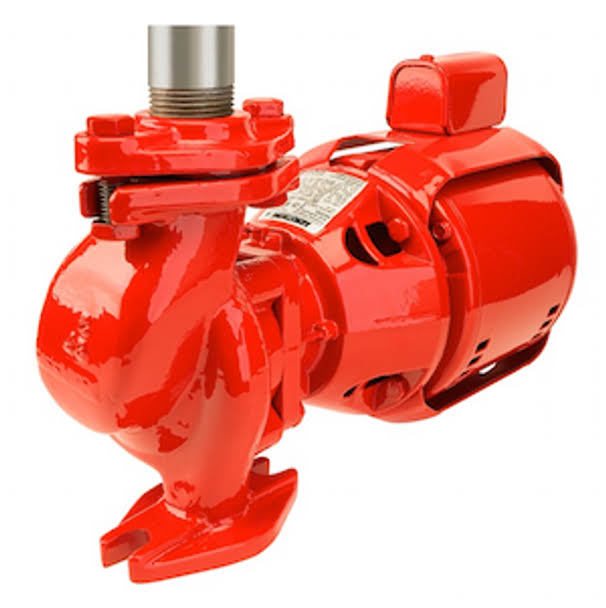
The Armstrong 110119MF-100 is a compact, high-efficiency wet-rotor circulator pump from the trusted H-Series, designed for quiet and reliable operation in commercial and residential hydronic heating and cooling systems. This model, with its 1/4 Horsepower, 3-phase motor, is engineered for continuous duty in applications requiring efficient fluid circulation with lower energy consumption.
Featuring a durable cast iron construction and a corrosion-resistant stainless steel shaft, this circulator is built for longevity. The wet-rotor design eliminates the need for a separate shaft seal, using the system fluid to lubricate and cool the motor bearings, resulting in remarkably quiet operation and reduced maintenance. Its compact, inline flange design allows for easy installation in space-restricted areas, making it an ideal choice for retrofits or new construction in apartment buildings, small commercial spaces, and complex multi-zone systems.
When reliability, quiet performance, and energy efficiency are priorities for your hydronic application, the Armstrong H-51-3 circulator delivers proven performance in a robust package.
📚 Technical Resources & Guides
Technical Specifications
| Specification Category | Detail |
|---|---|
| Manufacturer Part Number | 110119MF-100 |
| Series | Armstrong H-Series |
| Model | H-51-3 |
| Motor HP | 1/4 HP |
| Motor Speed | 1-speed (typically 2900 RPM) |
| Voltage/Phase | 3-Phase (Specific voltage may vary – confirm 208V, 230V, or 460V) |
| Connection Size | 1-1/4″ Flanged (or threaded based on configuration) |
| Connection Type | Flanged (Verify for specific model) |
| Maximum Working Pressure | 160 PSI / 11 Bar |
| Maximum Temperature | 230°F / 110°C |
| Construction – Casing | Cast Iron |
| Construction – Shaft | Stainless Steel |
| Motor Cooling | Wet Rotor (Liquid-cooled) |
| Installation | Inline, flange-mounted |
What’s Included
| Included | Not Included / Required Separately |
|---|---|
| ✓ Complete Wet Rotor Circulator Pump | ✗ Power Cables or Connection Kit |
| ✓ Flanged or Threaded Connections (as specified) | ✗ Isolation Valves |
| ✓ Gaskets (if applicable for flanged model) | �urine Strainer |
| ✗ Motor Starter (Required for 3-phase motor protection) |
🛠️ Recommended for a Complete Installation
-
Isolation: Armstrong Flanged Isolation Valves
-
Protection: Y-Strainer for Hydronic Systems
-
Control: Square D 3-Phase Motor Starter
Comparison Table: Armstrong H-Series vs. Alternative Pumps
| Feature | Armstrong H-Series Wet Rotor | Standard Dry Rotor Circulator | Basic Residential Circulator |
|---|---|---|---|
| Application | Commercial/Residential Hydronics, Heating | General Industrial, Booster | Residential Heating Only |
| Operation Noise | Very Quiet (Wet rotor design) | Moderate | Quiet to Moderate |
| Maintenance | Low (No mechanical seal to replace) | Periodic seal replacement | Low |
| Efficiency | High (Wet rotor design reduces energy loss) | Standard | Moderate |
| Installation | Compact, Inline | Requires more space | Compact |
| Ideal For | Space-limited installations, quiet zones | High-pressure applications | Single-family homes |
Frequently Asked Questions (FAQs)
Q1: What is a wet rotor circulator pump and what are its benefits?
A: A wet rotor pump has the motor rotor immersed in the pumped fluid, which acts as a coolant and lubricant. Benefits include:
-
Quieter operation due to fluid damping
-
No external cooling fan required
-
No mechanical seal to leak or replace
-
Compact design
Q2: Is this pump suitable for potable water systems?
A: While Armstrong H-Series pumps are designed for closed-loop hydronic systems, specific models may be rated for potable water. Always check the manufacturer’s specifications for NSF/ANSI 61 certification before using in potable water applications. This model is typically for heating/cooling loops.
Q3: This is a 3-phase pump. Can I use it with single-phase power?
A: No. The motor is specifically wound for 3-phase operation. Attempting to run it on single-phase power will damage the motor. You must have a 3-phase power supply or select a single-phase model.
Q4: What maintenance does this circulator require?
A: Wet rotor circulators require minimal maintenance. Primary concerns include:
-
Ensuring the system fluid is clean (use a strainer)
-
Preventing air locks in the system
-
Checking for unusual noises indicating bearing wear
-
Verifying proper operation through system pressure/temperature checks
Q5: How do I determine if this pump has the right capacity for my system?
A: Pump selection should be based on your system’s required flow rate (GPM) and total dynamic head (feet). Consult the pump performance curve for the H-51-3 model to ensure it meets your system’s requirements. Oversizing or undersizing will lead to inefficiency and potential issues.
Internal Link: Our guide on How to Read a Pump Curve will help you verify this is the correct model for your application.
Pros and Cons
| Pros | Cons |
|---|---|
| Quiet Operation: Wet rotor design ensures very low noise levels | 3-Phase Power Required: Not suitable for standard single-phase applications |
| Energy Efficient: Optimized design reduces power consumption | Specific Application: Primarily for closed-loop hydronic systems |
| Low Maintenance: No mechanical seal to replace | Professional Installation Recommended: Requires understanding of 3-phase wiring |
| Compact Design: Saves space in mechanical rooms | Cost: Higher initial cost than basic residential circulators |
| Reliable Performance: Armstrong reputation for quality | Voltage Specific: Must match exact voltage requirement of installation |
Conclusion & Ideal Use Case
The Armstrong 110119MF-100 H-51-3 circulator pump is an excellent choice for commercial and residential hydronic systems where quiet operation, energy efficiency, and reliability are paramount.
This pump is perfectly suited for:
-
Commercial Building HVAC Systems
-
Apartment Building Heating Systems
-
Hydronic Radiant Floor Heating Systems
-
Small Commercial Process Cooling Applications
-
Multi-Zone Residential Heating Systems
If you need a reliable, quiet circulator for a 3-phase hydronic application and value energy efficiency, the Armstrong H-Series represents a solid investment in quality.
🔗 Official Technical Resource
For the official pump performance curves, dimensional drawings, and installation manuals, always refer to the Armstrong Pump Product Documentation for the most accurate and up-to-date technical data.